BORAN
The Boran cattle breed is a historically unique, pure cattle breed. Boran cattle have a distinctive genetic composition focused on production, reproduction, body structure and composition.
Boran cattle are part of the Bos Indicus Cattle Group and were introduced to Africa shortly after the Arabian invasion around the 700s and first identified in the Borana Plateau in Southern Ethiopia. The Borana plateau has high-altitude climate conditions and regular harsh droughts. The Boran comprises 64% of Bos Indicus, 24% of Bos Taurus, and 12% of Africa-Bos Taurus. The Boran has characteristics that are compatible with arid conditions in Australia.
This breed has flourished in diverse African environments and will benefit Australian beef and cattle production. The Boran has high-quality meat with low input costs, as they perform well from paddock to plate and have the ability to be rounded off with little input at feedlots due to the rumen capacity and ability to convert feed into fuel and muscle growth.
The attributes of the Boran are what shape the structure of their performance, including high tick resistance, low susceptibility to diseases and their ability to adapt and thrive in sudden changes to climate (green and lush to drought conditions). Boran have strong herd and mothering instincts and are protective against any form of predation. At the same time, they have a docile temperament, high fertility, even in drought conditions, and longevity.
Most importantly, Boran are efficient with poor and low-quality feed (2-4% Dry matter and digestibility percentage) into kilograms of meat production with early maturity (maturity as early as 14-16 months) and the ability to reproduce. Boran cows of 15 years are still highly fertile and produce excellent offspring. A 16-year-old bull produces excellent, highly fertile sperm with 80-90% sperm quality.
Carcass maturity and traits are evidenced by a large rumen capacity, supporting the body depth and their ability to fatten evenly and grow eye muscle capacity.
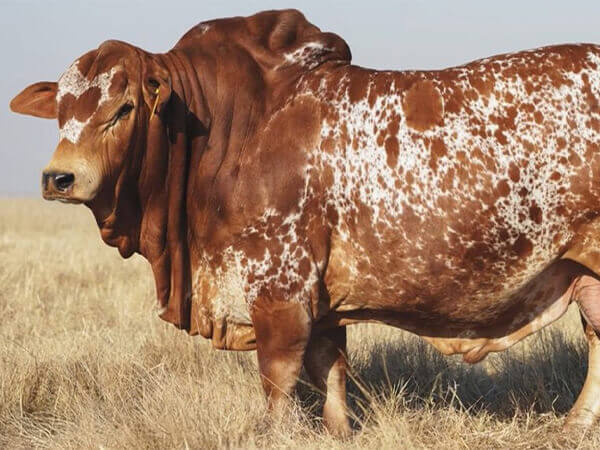
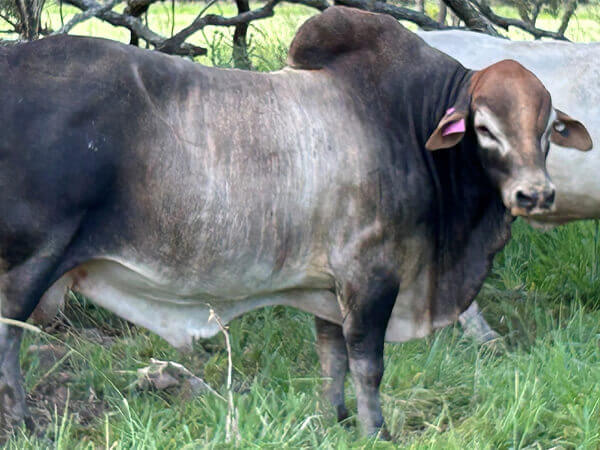
Boran cattle come in a diverse range of colours, however, the main colours are white, grey, and fawn in the body with light and dark brown shading in the neck, shoulders and hindquarter regions, black hooves and black muzzle. The Boran has small ears and a distinctive hump on the back (ranging from small to large).
Borans have larger and more sweat glands than the cattle breeds of Australia, allowing them to withstand high humidity and high temperatures.
Borans perform excellently in drought conditions and regions of significantly low temperatures and the ability to walk long distances in heat conditions, withstanding water stress.
Boran cattle were introduced to Australia by the Commonwealth Scientific and Industrial Research Organization (CSIRO) from 1990 to 1991 through the importation of embryos and semen (Australian Boran Cattle Incorporated, 2020). The first embryos were implanted in 1992, and the first international Boran were bred. The aim of the study trial was to find a Zebu cattle breed similar to Brahman, but unrelated and with different genetic composition. The traits of key interest that led to the Boran being the chosen breed were adaptability to hot, dry climates, unexpected drought survival ability, the hybrid vigour for potential crossbreeding, and fertility. Another trait that was regarded as beneficial was the ability of the Boran to survive and thrive on low-quality feed.
Over the years, the Boran has continued to survive and thrive in Australian conditions. This led to the establishment of the Australian Boran Association, now known as Australian Boran Cattle Incorporated (Australian Boran Cattle Incorporated, 2020). The breed has a superior level of resistance to insects due to the shorter hair coating, which makes it difficult for insects to attach themselves, and secondly, having a higher waxy oil-like layer on the skin, reducing the attachment of ticks and biting flies.
The Boran Cattle rest on average 2% of the time as opposed to Bos indicus and Bos taurus, which spend on average more than 4% and 10.12%. This high grazing time of the animal demonstrates they have the behavioural ability to utilize pasture feed efficiently. They ingest, digest, and break down consumed feed, and turn it into body and growth quicker than other cattle breeds. The unique traits, characteristics, and performance of the Boran cattle make them an ideal candidate for climatic and environmental conditions in Australia. The Biggest cattle company in Australia CCP use Boran extensively
Boran Bulls